Sleeping bag liners are compact, usually fitting into a stuff sack smaller than a Nalgene water bottle.(Photo: Suzie Dundas)
About ten years ago, I had a brilliant idea sure to revolutionize the outdoor industry. It was during an October camping trip at June Lake, near California’s Mammoth Mountain. We’d pitched our tents at an elevation of about 8,000 feet, looking down on the flickering lights from restaurants and rental companies along the lake’s curved shoreline. I was lying in my sleeping bag, thinking how I was just a little too cold for comfort but didn’t want to drop hundreds of dollars on a warmer one for my next trip. That’s when it hit me: what if there was a packable, travel-sized liner you could putinsideyour sleeping bag to add extra warmth when you need it?
The next day I gained cell service and internet access, which allowed me to quickly discover that my grand idea, a sleeping bag liner, was already a product sold by many companies, from Sea to Summit to Klymit and Western Mountaineering. I promptly purchased aSea to Summit Reactor Liner, and soon realized its potential usefulness went far beyond the campsite. Years later, other people have realized this, too, with non-camping companies rebranding them as “travel sheets” or “sleep sacks.” Bedding- and loungewear-maker Yala calls theirs the “Dreamsack,” advertising it as“the original luxury sleepsack.”
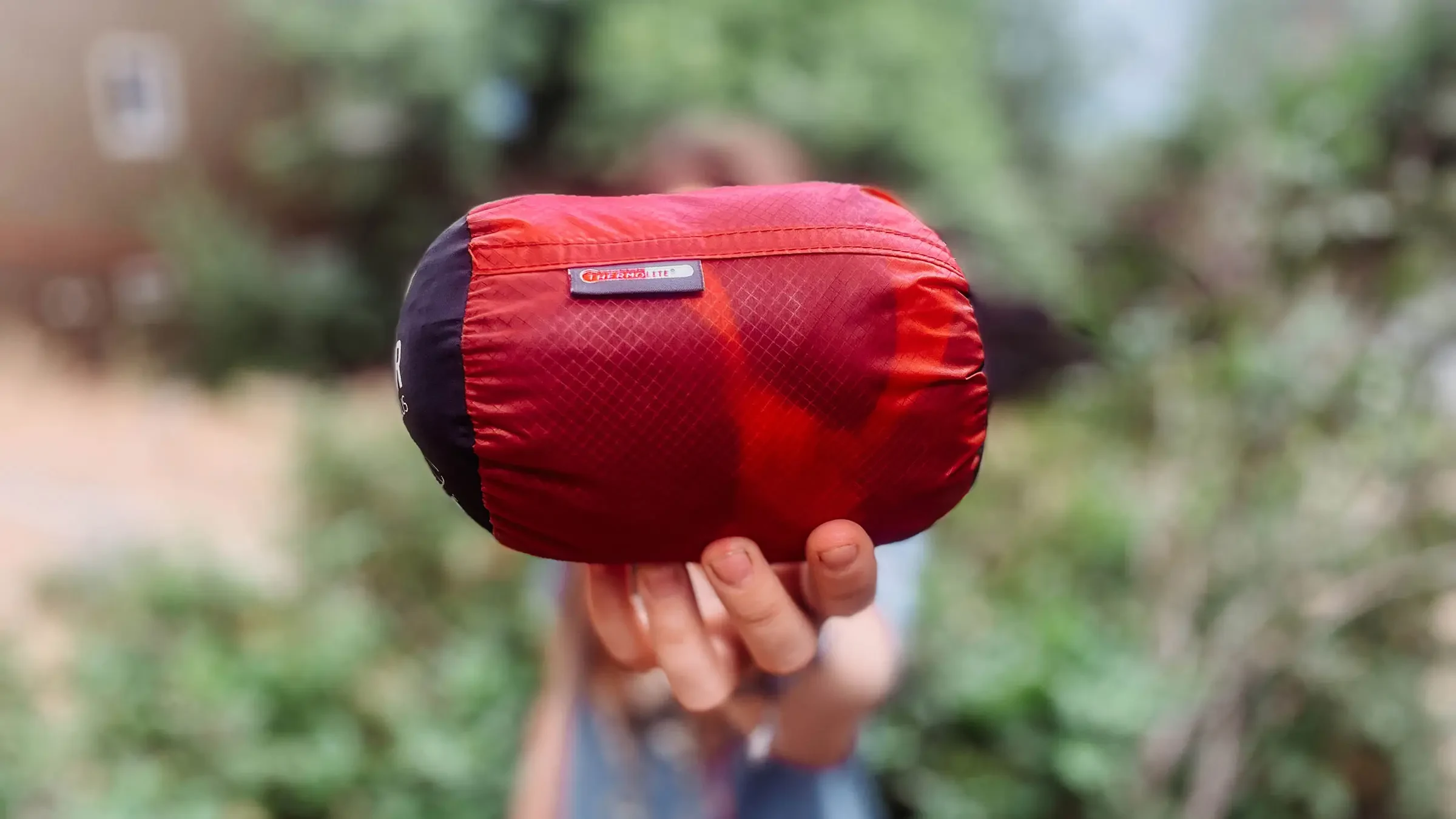
Sleeping bag liners vary in thickness, from lightweight cotton to insulating wool. Regardless of material, they’re all designed to be compact, usually fitting into a stuff sack significantly smaller than a Nalgene water bottle. This makes them ideal for camping and backpacking, but versatile and lightweight enough to carry on nearly every other type of trip, too.
Sleeping Bag Liners Make Ideal Airplane Blankets
Regardless of trip length or destination, I always fly with a sleeping bag liner in my carry-on bag, as it has multiple uses on the plane.
Air travel is a gauntlet of discomfort, usually made worse by middle-of-the-night drops in cabin temperature. And nothing is worse than finally falling asleep, only to wake up when your cheap airplane blanket slides off your lap—or, worse, be roused awake when a flight attendant needs to check that your seatbelt is buckled. But unlike an airplane blanket, travel liners envelop your body, providing consistent warmth without slipping off of creating cold spots. It’s a cocoon of comfort, and much easier to keep on with a seatbelt buckled on top. And when air conditioning is turned up to arctic levels on planes (or buses, or ferries), a liner doubles as a versatile infinity scarf when you tie the drawstring to the footbox.
But if you already have atravel blanket that doesn’t suck, your sleeping bag liner can also double as a travel pillow. You can use it in its stuff sack, but it works better if you pull it out and ball it up, starting at the bottom. Once it’s mostly balled up, give it a twist, wrap the top of the liner around the bulk, and tighten the top drawstring. Boom—instant airplane pillow.
Use Your Sleeping Bag Liner at Hotels
As someone who enjoys traveling to new places to play outside, I sometimes get the pleasure of staying in eco-lodges. These fun experiences can come with unexpected roommates; I recall one eco-lodge owner in Costa Rica joking with us that there was “no extra cost for the bugs in your room.” I’m not bug-phobic exactly, but I sleep better knowing the ants crawling up the bedpost aren’t going to make their way up my legs, too. A lightweight sleeping bag liner won’t add much warmth if you slip into it under a bedsheet, but it makes an ideal portable barrier against these unwanted guests. It’s especially useful in higher-end hotels that consider mosquito nets unnecessary, because bugs don’t discriminate based on how many stars a hotel has. And for some travelers, knowing you’re sleeping tucked inside your own clean sheet may be the difference between experiencing those unique stays or sticking to the comfort of an urban chain hotel.
But that’s not the only use for a sleeping bag liner in a warm climate. I once took an overnight sleeper train through northern Vietnam, which was breathtaking but rural and rustic. I was noticeably more comfortable falling asleep than my fellow travelers thanks to the extra cockroach-defending layer of a liner. It’s also useful when camping or sleeping outside is just one part of a longer trip and I’m borrowing a rental sleeping bag or sheets that may have a year’s worth of strangers’ sweat in the fabric.
How to Buy a Sleeping Bag Liner
The key to making sure your sleeping bag liner is as versatile as possible is getting one that maintains the basic principle: it needs to be a full cocoon, not a flat sheet. I also recommend getting one with a cinch around the top, both for maximizing your protection and using it as a scarf or airplane pillow. Some even have water-resistant stuff sacks (like theNemo Traceror Sea-to-SummitReactor), so you can clip them to the outside of your carry-on bag.
If you’re buying a sleeping bag liner for heat regulation, you’ll probably want to opt for a wool or synthetic liner, rather than cotton. The fabrics are similar to those used in outdoor clothing, so the usual rules apply: look for a quick-drying fabric in case you start to sweat, and opt for one you can throw in the washing machine, not one that requires special care. Also note the shape, as a mummy-shaped liner is warmer but restricts your available sleeping positions.
Good options that won’t break the bank include theWestern Mountaineering Tioga Sleep Liner, theSea to Summit Reactor Liner(my very first), or theRab Thermic Neutrino. All are in the $50-to-$100 range and warm enough to add a few degrees if you do actually use them in your sleeping bag.
| Spec | Value |
|---|---|
| Content | 985 words |
| Format | Field review |
| Source | Gear desk |